


-
Installation and construction methods of waveform guardrails
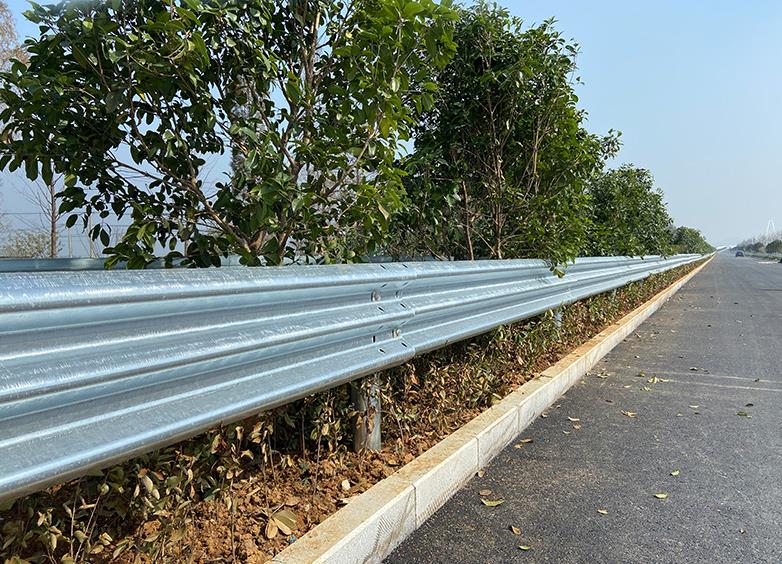
Hot Installation and construction methods of waveform guardrails
More1. Guardrail construction plan and method:
The construction of corrugated steel guardrails is to prevent uncontrolled vehicles from crossing the median or rushing out of the roadbed on dangerous road sections, so as not to cause secondary accidents; In order to absorb energy, reduce the degree of accidents and damage to vehicles and personnel, and induce vision and beautify roads.
(1) Construction plan
① Strictly select materials according to the requirements of the bidding documents, and all steel materials must have material quality certificates as required by the bidding documents.
The steel components used in the waveform beam steel guardrail are all treated with hot-dip galvanizing for metal corrosion prevention. After hot-dip galvanizing, the connection surface of high-strength bolts should be coated with butter and lubricated with phosphating. They should be sealed and packaged at the factory to prevent rust or dirt during transportation and storage.
② The overall construction sequence is to first install single-sided guardrails and then double-sided guardrails, install anti glare facilities, adopt segmented construction, connect each section, self check each section, implement full process quality control, and ensure the completion of the entire line.
③ The construction team consists of two pile driving teams, two installation teams, one measurement team, one maintenance team, and one transportation team, totaling 15 people. We plan to equip 2 DY300 pile drivers, 2 AC welding machines, and 1 heavy-duty truck.
(2) Construction method a: Column installation
(a) Use the driving method to set up the columns. The installation of columns using the driving method should strictly follow the position determined by the steel drill. First, place the self-made guide, and then drive the columns along the guide holes to ensure verticality. The column should be driven into the soil to the design depth. When it is driven too deep, the column should not be partially pulled out for correction, but must be completely pulled out and re driven after the foundation is compacted. The installation of columns should be consistent with the design drawings. And coordinated with the road alignment, the columns should be firmly buried in the soil to the design depth and perpendicular to the road surface.
(b) When it is difficult to drive in, drilling or excavation methods can be used to install columns. When using the drilling method for column installation, the column should be backfilled with the same material as the roadbed after positioning, and compacted in layers to achieve a density not lower than that of the adjacent undisturbed soil. When using excavation method for construction and burying columns, the backfill material should be of good quality and compacted in layers (each layer should not exceed 15cm in thickness), and the compaction degree of the backfill soil should not be less than that of the adjacent undisturbed soil. Columns and piles in rocks should be backfilled with granular materials and compacted.
(c)
Considering the impact of guardrail structure on the landscape and driver's line of sight guidance, after the installation of the columns, the verticality, position, and elevation should be checked immediately. The verticality inspection is carried out by using a ruler to check each one. Position and spacing checks are conducted using a steel ruler for straight lines, and using a theodolite for curved sections using the deflection angle method; The horizontal position inspection uses a ruler to measure the horizontal distance between the road centerline and the columns. Elevation inspection, based on the inner surface of the curbstone, using self-made molds or level gauges to inspect each one. The horizontal and vertical directions should form a smooth linear shape. The installation of the transition section and end columns is a key point to pay attention to during construction. During construction, the position and height of the columns should be strictly controlled, and attention should be paid to the parabolic shape. Installation of anti blocking blocks, waveform beams, and ends
(a) After adjusting the column, the bracket (anti blocking block) can be installed. The bracket (anti blocking block) is fixed between the corrugated beam and the column by connecting bolts. Before tightening the connecting bolts, adjust the bracket (anti blocking block) to ensure accurate positioning.
(b) The waveform beams are connected to each other by splicing bolts and fixed to the bracket (anti blocking block) by connecting bolts. The overlapping direction of roadbed guardrails and corrugated beams is the key to installation, and installation should be strictly carried out according to the drawings. The overlapping direction should be consistent with the driving direction. The waveform beam should be continuously adjusted during the installation process. Therefore, the connecting bolts and splicing bolts should not be tightened too early, so that the long circular holes of the corrugated beam can be adjusted in a timely manner during installation to form a smooth line shape and avoid local unevenness. When the linearity of the guardrail is considered satisfactory, the bolts can be tightened finally. The connecting bolts between the bracket (anti blocking block) and the corrugated beam should not be tightened too tightly, in order to adjust the temperature stress with a long circular hole.
(c) The end beam is connected to the standard section guardrail through splicing bolts. The construction method of end beams is basically the same as that of corrugated beams. After the segmented construction is completed, self inspection is qualified and reported to the supervising engineer for acceptance.
Attention:
(1) The column must not have obvious twisting, welding elongation is not allowed, and burrs at the ends must be removed. The layout of columns should be based on the control points on the highway, and the spacing between columns should be adjusted appropriately according to the distance measurement; The installation of columns should be consistent with the design drawings and coordinated with the road alignment; The column must be firmly buried in the soil, and the burial depth must reach the depth specified in the design, and be perpendicular to the ground plane.
(2) Regardless of the method used to install the guardrail, the contractor should try to avoid damaging the pipes buried under the road surface as much as possible
If the line facilities are damaged, the contractor shall be responsible for repairing them, and the repair costs after the damage shall be borne by the contractor.
(3) After the installation of the guardrail, a smooth line should be formed in both horizontal and vertical directions. Good guidance for landscape and driver's line of sight.
(4) The waveform beam guardrail set on the roadside should not allow the guardrail surface to intrude into the boundary of the highway building.
(5) Waveform beams and slabs should generally be formed by continuous rolling. The bolt holes on the waveform beam must be accurately positioned,
-
Characteristics of bicycle parking rack products
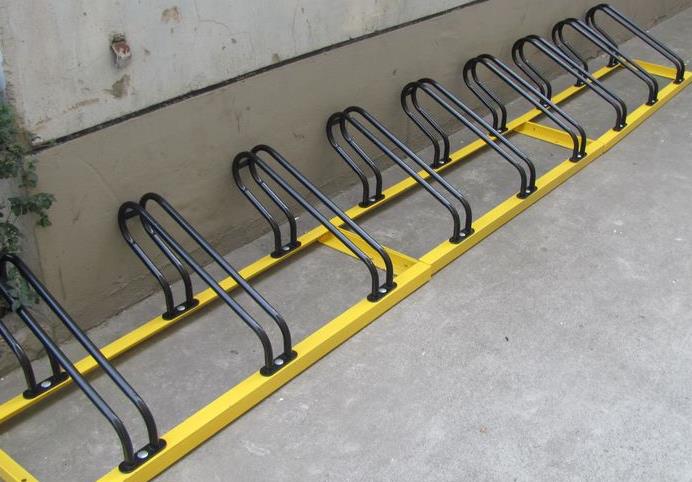
Hot Characteristics of bicycle parking rack products
More1. It is made of imported 215 carbon steel from Taiwan and uses various stamped parts. In addition to oil removal, rust removal, phosphating, and purification, it also needs to undergo two processes of hot-dip galvanizing and spraying. Exquisite craftsmanship, ensuring no rust for 20 years.
2. Adopting a new process of spray coating, no thinner is required, and the construction is environmentally friendly and non-toxic to human health; Excellent appearance quality of the coating, strong adhesion and mechanical strength
3 spiral parking racks can effectively accommodate various types of bicycles, electric vehicles, and motorcycles, achieving a multifunctional function and reducing investment costs.
4 solves the inconvenience of traditional spiral parking rack packaging and transportation costs. The spiral adopts 4 sets of packaging, which greatly saves transportation space and costs compared to the traditional parking rack packaging method.
There are 5 different colors to choose from, including yellow, green, black, and white.
Applicable locations:
Bicycle parking racks are widely used in non motorized vehicle parking areas on both sides of municipal roads, residential areas with non motorized vehicle parking garages, factories or units with non motorized vehicle parking areas, shopping malls or public places with non motorized vehicle sheds or parking points, etc.
Instructions for use:
Classic style: Equipped with 7 mounting screw holes, 3 holes on each end of the base, and 1 hole in the middle section. Simply use an impact drill to drill holes according to the expansion screw specifications on the hard ground corresponding to each mounting hole point, and then fix them with expansion screws to use with confidence.
-
Daily maintenance methods for signs
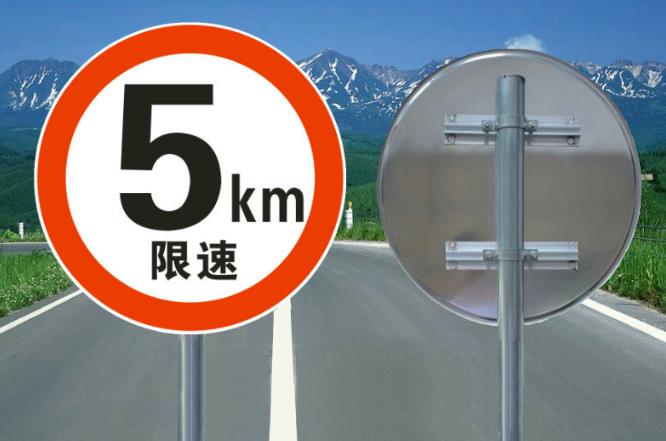
Hot Daily maintenance methods for signs
More1. To maintain the appearance and smoothness of the signboard surface, as well as the integrity of the paint color, efforts should be made to avoid collisions, scratches, etc. with hard or sharp objects
2. Due to the metal material characteristics of certain signs, it is not advisable to place them in a strong acidic or alkaline environment for a long time
3. Acrylic (organic glass) and other products are prone to wear and scratches without special treatment or the addition of hard resistant agents For general dust treatment, you can use a chicken feather duster or rinse with water, and then wipe with a soft cloth If the surface oil stains are to be treated, a soft detergent can be added with water and wiped with a soft cloth
4. Identification plate If the surface needs to be cleaned regularly, diluted alcohol or soapy water can be prepared and wiped with a soft cloth or brush, but a hard brush or coarse cloth should not be used. When wiping, follow the surface pattern of the signboard (if any)
-
Factors to be considered in the design of road guardrails
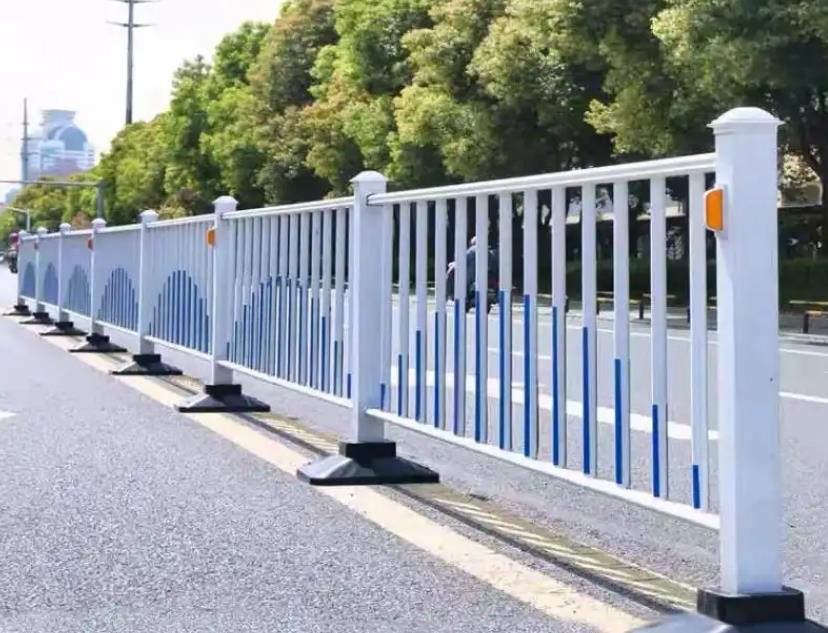
Factors to be considered in the design of road guardrails
Nowadays, the design of road guardrails is also very particular. So, what factors should we consider in the design? Today, we will talk about the factors that need to be considered in the design of road guardrails. We hope our introduction can be helpful for everyone in their future lives. Let's take a closer look at this information. Let's take a look together!
What factors should be considered in the design of road guardrails?
(1) Galvanized design: As we all know, road guardrails are coated with a layer of zinc, which not only provides protection but also extends the service life of the guardrail. The durable coating of galvanized design consists of hot-dip zinc layer, zinc rich phosphating layer, organic zinc rich epoxy powder coating, and polyester "flawless" color powder coating. It requires good surface treatment technology and advanced specialized equipment to scientifically and reasonably combine the four protective layers, endowing municipal guardrails with excellent corrosion resistance, good moisture resistance, chemical resistance, and strong UV stability.
(2) Color function design: In fact, the color elements of road guardrails are also very important. In order to meet the needs of traffic safety and smooth roads, green is changed from green to blue on the basis of current traffic colors of red, white, yellow, green, and black, forming five basic colors of red, blue, white, yellow, and black. Various combination colors related to direction, driving rules, and warnings are designed and configured on municipal traffic guardrails to enrich the concise and clear characteristics of urban traffic language, which can be easily understood at a glance.
2024.12.04MORE+ -
Set up some speed reduction signs on the road surface with cast steel speed bumps
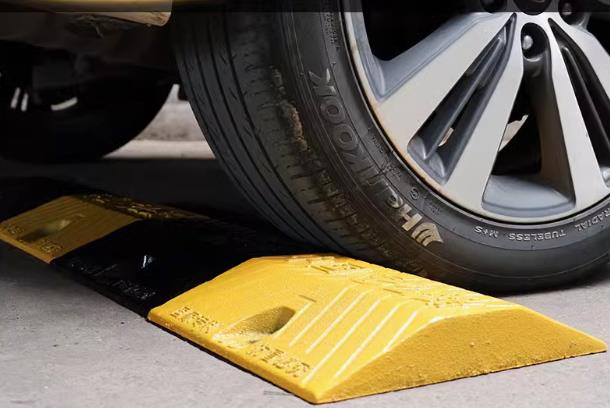
Set up some speed reduction signs on the road surface with cast steel speed bumps
Cast steel speed bumps are installed on the road surface with some speed reduction signs. Gas station vehicles frequently appear, so speed limit signs, collision barriers, speed reduction zones and other facilities will be set up at the station to remind the station to slow down and protect the safety of personnel and equipment. Especially, it is necessary to install speed reduction gas stations. So, we will further discuss this topic on which speed reduction zone to choose and which suitable location to install. Below, I will share some of your opinions to explore. Many driving friends often encounter different types of deceleration zones, and there are mainly the following types of cast steel speed bumps:
1. Cast steel speed bumps, commonly found at village intersections, have low construction costs but are on the high side with low color rendering. The color is similar to the road surface and visually unclear, causing emergency braking, jolting, and even hitting the chassis when driving in front. 2, Cast steel speed bumps are commonly found in workplace squares, residential areas, and other places, with a height of about 5 centimeters above the ground. They are generally fixed to the ground with M12X14 sleeve expansion screws, which are yellow and black in color, visually obvious, and not expensive. However, their service life is short, and rubber speed bumps are often exposed from screws and long screws, which can easily damage tires. To replace the ground, a new speed bump needs to be repaired and fixed to the ground.
3. Cast steel speed bumps are commonly found at highway intersections, toll stations, and other places. Rubber speed bumps with better service life are superior to rubber speed bumps, but their price is much higher.
4. Paving bricks in point like deceleration zones are commonly found on highways, urban roads, and other fast roads. This type of deceleration is slightly higher than that of roads, forming a film and generally using glass bead primer and paint. They are beautiful, wearable, and have visibility at night. When vehicles walk on them, they emit a strange whistle sound to remind drivers to slow down.
5. Reflective hot melt marking speed reduction zone. Just like the difference in speed reduction compared to the same material, the production process is different from that of a cross highway strip. There is a distance between each line, with intermittent vibrations above to remind drivers to slow down.
2024.12.04MORE+ -
Urban guardrails play a very important role in cities
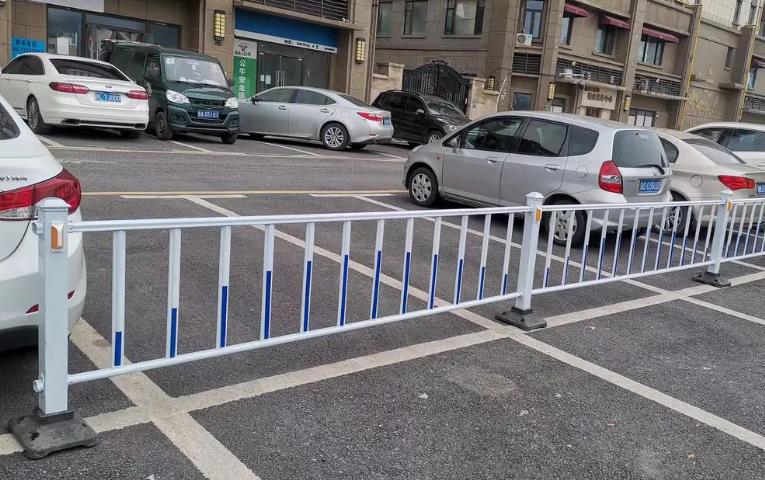
Urban guardrails play a very important role in cities
With the improvement of people's living standards, private cars are becoming increasingly popular. Nowadays, traffic safety has become a killer on the road, and the installation of guardrails has become a practical defense method!
In fact, the installation of urban guardrails greatly reduces the incidence of traffic accidents and lowers the safety of residents' travel. Highway guardrails have become various types of highway guardrails. According to stiffness, it can be divided into flexible guardrails, semi-rigid guardrails, and rigid guardrails.
Flexible guardrails generally refer to hard guardrail structures with significant buffering capacity. This is a structure fixed on a pillar by several steel cables with initial tension. It mainly relies on the tensile stress of the cable to resist collisions and absorb the energy of the vehicle. The cable works within the elastic range and basically does not need to be replaced. This type of guardrail has a beautiful appearance and no sense of pressure when driving, but its visual guidance effect is poor.
Semi rigid guardrails generally refer to continuous beam column guardrail structures. This is a beam structure with fixed pillars that relies on the bending deformation and tension of the guardrail to resist vehicle collisions. According to their different structures, beam guardrails can be divided into W-shaped corrugated beam guardrails, pipe beam guardrails, and box beam guardrails. They all have a certain degree of stiffness and toughness. They absorb collision energy through the deformation of the light beam. Damaged parts are easy to replace. Has a certain visual induction effect and a beautiful appearance.
Rigid guardrail generally refers to a basic non deformable guardrail structure. This is a concrete wall structure with a certain cross-sectional shape that absorbs collision energy through car climbing, deformation, and friction. Rigid guardrails do not deform during collisions, are almost undamaged, and have low maintenance costs, but they can create a sense of pressure on the vehicle's movement. It is easy to snow when used in cold regions.
After the installation of urban guardrails, zinc rich epoxy powder and UV resistant polyester powder are sprayed on the surface protective layer of highway and railway guardrails, forming a "long-lasting" coating. Its anti-corrosion ability is several tens of times that of other coatings and single-layer powder coatings, which belongs to high-tech content and is one of the highest in the world today.
2024.12.04MORE+ -
The role of iron horse guardrails in traffic safety
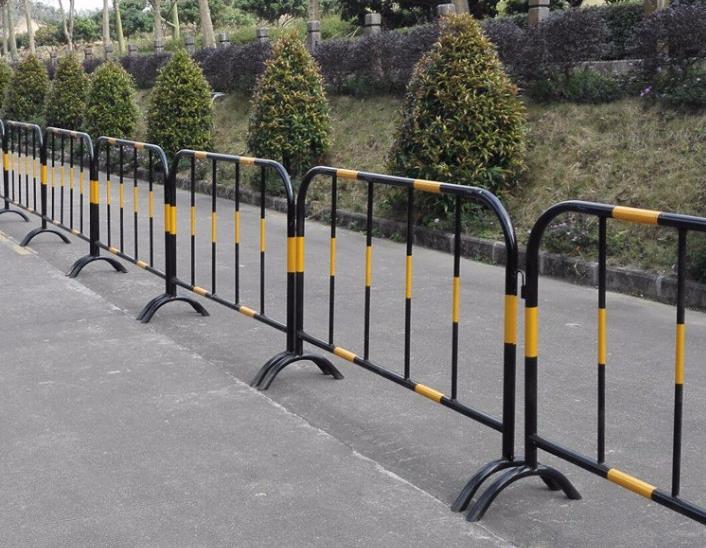
The role of iron horse guardrails in traffic safety
We often see that in some cities, there is nothing in the middle of the road, and some vehicles will turn around and turn at will, posing a great threat to traffic safety. Since the emergence of municipal iron horse guardrails, this has been effectively prevented from happening, and for municipal departments, it has made work very simple.
Why do you say that? The main reason is that the current municipal iron fence can effectively meet the safety needs of roads and to a large extent, regulate traffic safety. In addition, there are various types of iron horse guardrails nowadays, so when municipal companies carry out construction, no matter what kind of road they are on or what kind of guardrail they need, they can make certain choices according to their own needs. Because nowadays, guardrails of any material and specification can exist, providing more choices for municipal companies.
So, the iron horse guardrail not only ensures the safety of people's road traffic, but also provides more convenience for municipal work. It is precisely because of such iron horse guardrails that our lives can become more beautiful.
2024.12.04MORE+ -
What are the factors that cause damage to highway guardrails?
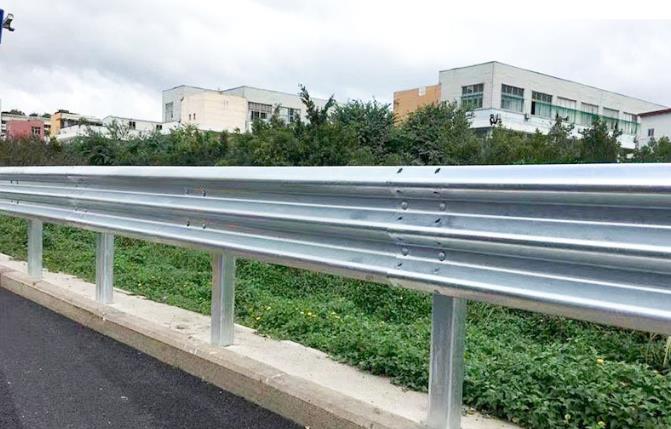
What are the factors that cause damage to highway guardrails?
Highway guardrails are a common and important facility on highways, which can reduce the losses caused by accidents and protect the safety of passengers in case of accidents.
So, the maintenance and replacement of guardrails is also an extremely important task. So, what are the reasons for the damage of highway guardrails?
There are two main reasons for the damage of highway guardrails:
Natural factors
The highway guardrail panels are installed on both sides of the road and are subjected to harsh weather conditions, resulting in varying degrees of damage and oxidation rust on the surface of the guardrail panels. When the guardrail board rusts, it accelerates the rate of secondary oxidation, greatly reducing the service life of the guardrail board.
Human factors
When a vehicle collides with it, due to the excellent collision resistance and energy absorption of the corrugated steel guardrail on the highway, it is not easily damaged and can provide good protection for the vehicle and passengers. When road maintenance or other reasons require merging, it is convenient to pull out and remove the various guardrail columns at the opening to open a passage for vehicle traffic. Guardrail boards not only protect the safety of vehicles and personnel, but also cause corresponding damage to highway guardrails.
Therefore, after the installation of the guardrail board on the road, regular maintenance and repair should be carried out to effectively ensure the extension of the guardrail board's service life.
2024.12.04MORE+ -
Characteristics and functions of steel pipe car stopper
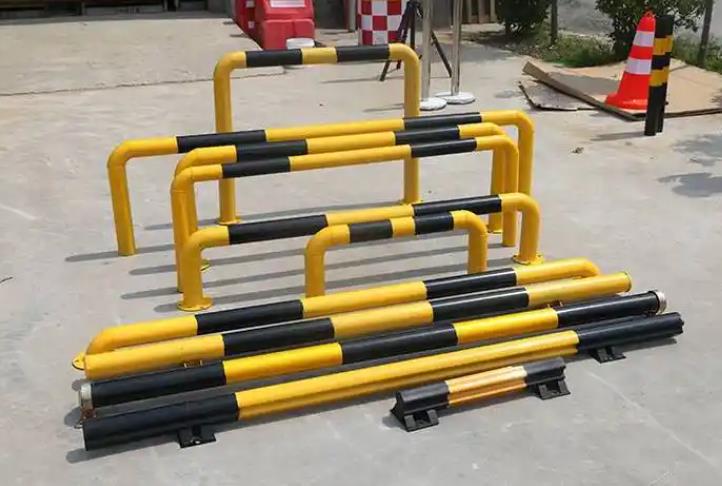
Characteristics and functions of steel pipe car stopper
Product Features
Steel pipe car stopper, also known as triangular car stopper, is made of thickened steel welded together, with yellow reflective strips on both sides, forming a sharp warning contrast with the black paint surface. There are two fixing points on both sides, and the bottom force surface is wide, with good stability. It is a practical car stopper with high cost-effectiveness, generally used in large external parking lots, community garages or underground parking lots, special parking spaces for unit factory vehicles, outdoor parking spaces and other vehicle parking spaces.
Product Features
1. Made of high-strength steel pipes, it has good anti-collision and compressive performance.
2. The surface is covered with a wear-resistant, high reflective brightness yellow shaped reflective film, making the wheel locator particularly eye-catching and reflective, achieving a warning effect;
3. Special craftsmanship ensures long-lasting color, resistance to fading, and a beautiful and elegant appearance;
4. The installation is stable, and the vehicle will not move or deform during impact, effectively regulating parking order;
5. Easy to install and maintain.
2024.12.04MORE+